

How to Make Skincare Products at Home Safely
Creating your own skincare products at home has become increasingly popular as people seek more control over what they apply to their skin. Whether you're drawn to natural ingredients, vegan formulations, or simply want to understand what goes into your daily routine, learning to make skincare can be both rewarding and empowering. The DIY beauty movement has grown significantly over recent years, with more people recognising the benefits of crafting personalised products tailored to their unique skin needs. This guide will walk you through the essentials of home skincare creation, from understanding ingredients to ensuring safety and quality in your formulations.
Understanding the Basics of Skincare Formulation
When you decide to make skincare products, you're essentially becoming a formulator. This means understanding how different ingredients work together to create stable, effective products. Every skincare item, from the simplest face oil to complex emulsions like creams, follows specific principles of cosmetic chemistry.
The foundation of any skincare formulation rests on three key phases: the oil phase, the water phase, and the active ingredients. Oil-soluble ingredients include carrier oils, butters, and oil-soluble vitamins, whilst water-soluble components encompass hydrosols, aloe vera, and water-soluble actives. When you make skincare products that combine these phases, you create emulsions that require emulsifiers to bind oil and water together.
Essential Equipment and Ingredients
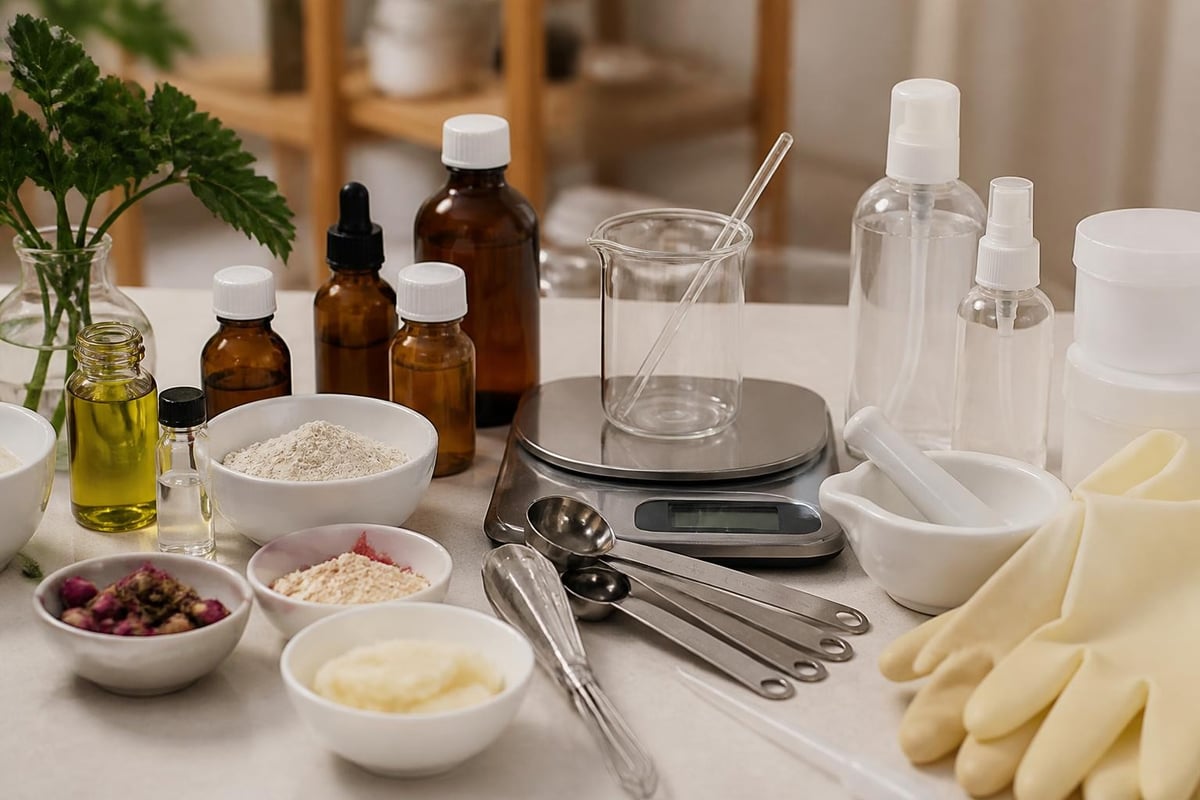
Before you begin, gathering the right tools ensures both safety and success:
- Digital scale (accurate to 0.1g)
- pH test strips or meter
- Glass beakers or heat-safe containers
- Stainless steel or silicone spatulas
- Thermometer
- Sterilised bottles and jars
- Protective equipment (gloves, safety glasses)
Your ingredient pantry should start simple. Quality carrier oils like jojoba, sweet almond, or rosehip form excellent bases. Natural emulsifiers such as emulsifying wax or lecithin help create stable lotions. Preservatives are absolutely essential for any water-containing product – this isn't optional if you want safe, long-lasting formulations.
Safety Considerations When Creating Skincare
Safety must always be your top priority when you make skincare products. Unlike cooking, where a pinch of this or that might work, cosmetic formulation requires precision and adherence to specific guidelines. The European Union's cosmetic regulations provide comprehensive safety standards that, whilst aimed at commercial products, offer valuable guidance for home formulators.
Recent research has highlighted important safety concerns. A systematic review of adverse effects from cosmetic products found that many reactions stem from improper formulation, contamination, or unsuitable ingredient combinations. Understanding these risks helps you create safer products from the start.
Critical Safety Rules
Preservative systems are non-negotiable for water-containing products. Bacteria, mould, and yeast thrive in water-based formulations, potentially causing skin infections or worse. Always use broad-spectrum preservatives at the manufacturer's recommended percentage.
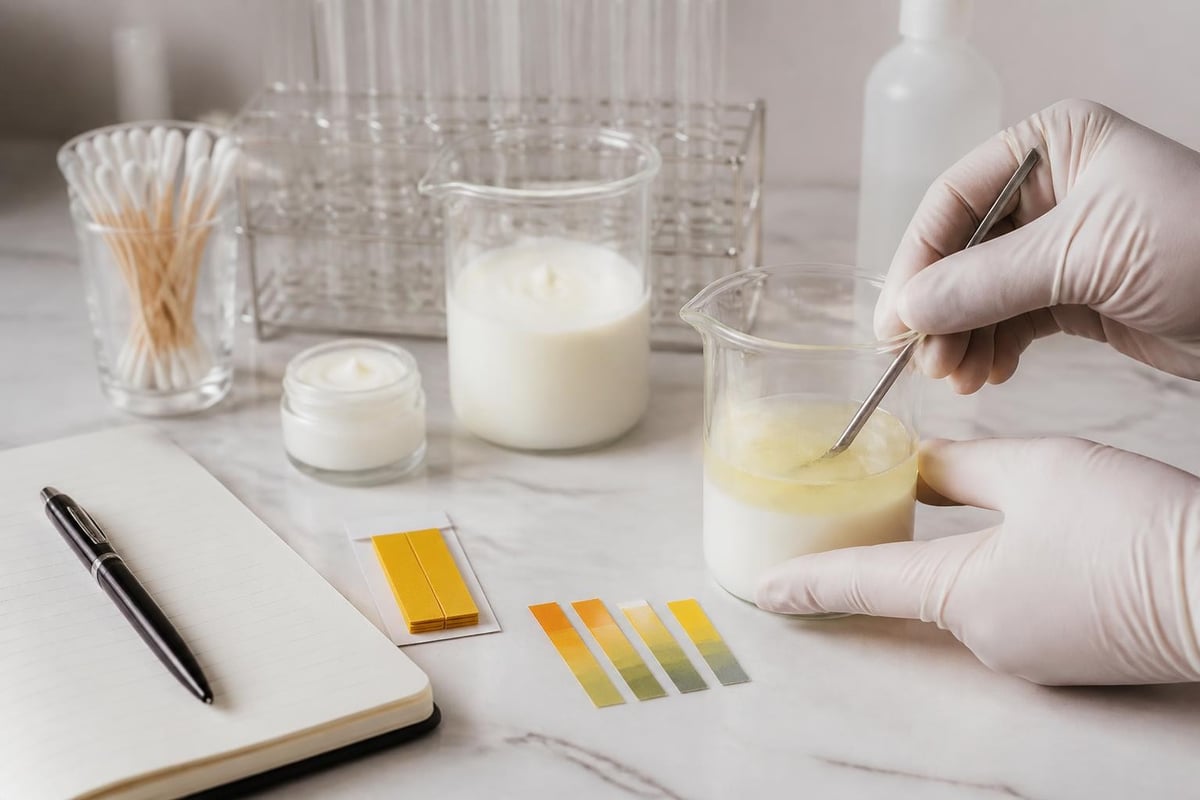
pH balance matters enormously for skin health. The skin's natural pH hovers between 4.5 and 5.5 – slightly acidic. Products outside this range can disrupt the skin barrier, leading to irritation, dryness, or increased sensitivity. Test every batch with pH strips or a calibrated meter.
Patch testing protects you from allergic reactions. Before using any new formulation on your face, apply a small amount to your inner forearm and wait 24-48 hours. This simple step can prevent significant problems.
| Safety Aspect | Why It Matters | How to Implement |
|---|---|---|
| Preservatives | Prevent microbial growth | Use 0.5-1% broad-spectrum preservative |
| pH Testing | Maintain skin barrier function | Test each batch, adjust to 4.5-5.5 |
| Sterilisation | Reduce contamination risk | Wipe equipment with 70% isopropyl alcohol |
| Documentation | Track formulas and reactions | Keep detailed notes of ingredients and percentages |
Simple Formulations for Beginners
Starting with straightforward recipes builds your confidence and skills. Single-phase products like oils, balms, and simple toners let you make skincare without the complexity of emulsions. These formulations teach you fundamental principles whilst producing genuinely useful products.
Nourishing Face Oil Blend
Face oils are perhaps the easiest place to start. They require no preservatives, no emulsifiers, and minimal equipment. A basic formulation might include:
- 80% base oil (jojoba for normal skin, rosehip for dry or mature skin)
- 15% secondary oil (argan, evening primrose, or hemp seed)
- 5% specialty oil (sea buckthorn, tamanu, or vitamin E)
Mix the oils thoroughly, pour into a sterilised dark glass bottle, and label with the date. This product stays fresh for approximately six months when stored properly.
Soothing Balm for Dry Skin
Balms combine oils with waxes to create a semi-solid consistency perfect for targeted application. The best face care products often include balms for their intensive nourishing properties.
A simple balm requires:
- 70% carrier oils (choose based on skin type)
- 25% butters (shea, cocoa, or mango)
- 5% beeswax or candelilla wax (for vegan formulations)
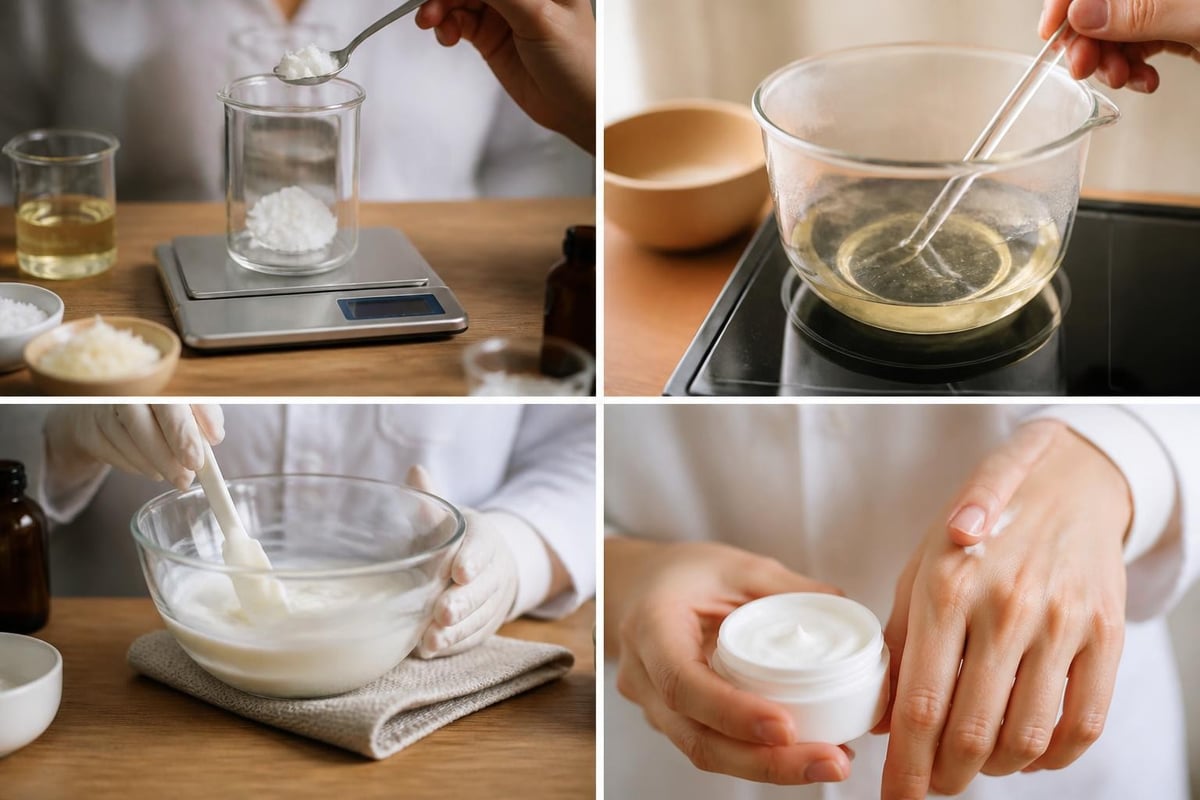
Gently heat oils, butters, and wax together until melted, remove from heat, stir well, and pour into containers before the mixture solidifies.
Formulating Water-Based Products
Once you're comfortable with oils and balms, water-based products open new possibilities. Toners, serums, and creams all contain water, which means they require preservatives and often more complex formulation techniques. When you make skincare with water, you're creating an environment where microbes can thrive without proper precautions.
Understanding Emulsions
Emulsions are the backbone of most skincare products. They allow you to combine beneficial water-soluble and oil-soluble ingredients in one stable product. There are two main types:
Oil-in-water (O/W) emulsions have water as the continuous phase with oil droplets dispersed throughout. These feel lighter and absorb quickly – think lotions and light creams.
Water-in-oil (W/O) emulsions have oil as the continuous phase with water droplets suspended within. These feel richer and more occlusive – ideal for very dry skin or protective barriers.
The emulsifier you choose determines which type of emulsion you'll create. Natural options include cetearyl alcohol (despite the name, it's a fatty alcohol that's skin-friendly), glyceryl stearate, and lecithin. Each requires specific ratios and techniques for stability.
Basic Lotion Recipe
Creating a stable lotion requires attention to temperature and technique:
Water Phase (70%)
- Distilled water or hydrosol
- Humectants like glycerine or hyaluronic acid
Oil Phase (25%)
- Carrier oils
- Emulsifying wax
- Fatty alcohols or esters
Cool Down Phase (5%)
- Preservative
- Essential oils or fragrance (following IFRA Standards for safe usage)
- Additional heat-sensitive actives
Heat both water and oil phases separately to 70-75°C. Pour the oil phase into the water phase whilst stirring continuously. Continue stirring as the mixture cools, maintaining movement until it reaches approximately 40°C before adding cool-down ingredients.
Working with Natural and Vegan Ingredients
The beauty of making your own products lies in complete control over ingredients. For those following vegan and cruelty-free skincare principles, home formulation ensures no animal-derived ingredients enter your routine.
Vegan Alternatives to Common Ingredients
| Traditional Ingredient | Vegan Alternative | Properties |
|---|---|---|
| Beeswax | Candelilla or carnauba wax | Provides structure and texture |
| Lanolin | Plant-based squalane | Deep moisturisation |
| Collagen | Plant ceramides, peptides | Skin barrier support |
| Honey | Agave nectar, maple syrup | Humectant properties |
| Milk proteins | Oat protein, rice protein | Skin conditioning |
Natural doesn't automatically mean better or safer – poison ivy is natural, after all. The Cosmetic Ingredient Review provides evidence-based safety assessments for thousands of ingredients, both natural and synthetic. Consulting these reports helps you make informed decisions about what to include in your formulations.
Botanicals and Extracts
Plant extracts offer wonderful benefits but require careful handling. Some considerations when you make skincare with botanicals:
- Photosensitivity: Certain citrus oils and extracts increase sun sensitivity
- Allergens: Natural ingredients can trigger allergies just as readily as synthetic ones
- Stability: Plant materials can be less stable than their synthetic counterparts
- Standardisation: Natural ingredients vary in potency between batches
Creating your own extracts through infusion or maceration gives you control over quality and sourcing. Infusing herbs in oil or creating water-based decoctions allows you to harness plant benefits whilst ensuring freshness.
Preserving Your Creations
Without proper preservation, water-containing products become bacterial breeding grounds within days. This is perhaps the most critical aspect to understand when you make skincare at home. Many DIYers resist preservatives, preferring "all-natural" formulations, but this approach risks serious skin infections and product spoilage.
Choosing Appropriate Preservatives
Different preservatives work in different pH ranges and against different microbes. Broad-spectrum preservatives protect against bacteria, yeast, and mould. Popular natural-leaning options include:
- Leucidal Liquid (derived from fermented radish root)
- Geogard ECT (blend of benzyl alcohol and other natural preservatives)
- Optiphen Plus (phenoxyethanol-based, widely accepted)
Each preservative has specific usage rates, typically between 0.5% and 1% of total formulation. Never reduce the recommended percentage – this compromises efficacy and safety.
Antioxidants aren't preservatives but they prevent oils from going rancid. Vitamin E (tocopherol), rosemary extract, and green tea extract all slow oxidation, extending shelf life of oil-based products.
Packaging and Storage Best Practices
How you store and package products dramatically affects their longevity and safety. When you make skincare, you must think beyond the formulation itself to how the product will be used and stored.
Container Selection
- Airless pumps minimise oxygen exposure and contamination
- Dark glass protects light-sensitive ingredients
- PET plastic offers a lightweight, shatter-resistant alternative
- Jars work well for thick products but increase contamination risk
Sterilise all containers before use. Wash thoroughly with hot, soapy water, rinse well, then wipe with 70% isopropyl alcohol and allow to air dry completely.
Proper Storage Guidelines
- Keep products away from direct sunlight and heat
- Store water-based formulations in the refrigerator if they'll be used within two weeks
- Label everything with ingredients and date of manufacture
- Use clean, dry hands or spatulas – never dip wet fingers into products
- Monitor for changes in smell, colour, or texture
Most home-made products last 3-6 months with proper preservation and storage. Oil-only products may last up to a year, whilst water-based formulations have shorter shelf lives even with preservatives.
Formulating for Different Skin Types
Understanding skin types allows you to make skincare perfectly tailored to specific needs. The combination skin requires different ingredients than oily skin or dry, sensitive skin.
Ingredient Selection by Skin Type
For Oily and Acne-Prone Skin:
- Light oils: jojoba, grapeseed, hemp seed
- Astringent botanicals: witch hazel, tea tree, lavender
- Clay masks: kaolin, bentonite
- Niacinamide and salicylic acid actives
For Dry and Mature Skin:
- Rich oils: avocado, rosehip, argan, borage
- Humectants: hyaluronic acid, glycerine, aloe vera
- Butters: shea, cocoa, mango
- Antioxidants: vitamin E, CoQ10, resveratrol
For Sensitive Skin:
- Gentle oils: calendula-infused oil, chamomile
- Soothing ingredients: colloidal oatmeal, allantoin
- Anti-inflammatory botanicals: chamomile, calendula, liquorice root
- Minimal fragrance or essential oils
Creating a skin-boosting breakfast routine works hand-in-hand with topical skincare, as internal nourishment supports external radiance.
Quality Control and Testing
Professional cosmetic manufacturers follow strict Good Manufacturing Practice guidelines to ensure product safety and consistency. Whilst home production operates on a smaller scale, adopting similar principles improves outcomes when you make skincare.
Essential Tests for Home Formulations
Stability Testing Store samples at different temperatures (room temperature, refrigerator, warm location) for several weeks. Check weekly for:
- Separation or phase splitting
- Colour changes
- Odour changes
- pH drift
- Texture changes
Challenge Testing (advanced) This involves intentionally contaminating small samples with bacteria or mould to verify your preservative system works. Whilst complex for home formulators, it's the gold standard for ensuring safety.
User Testing Before making large batches, test small amounts on yourself over several weeks. Monitor for:
- Immediate reactions (stinging, redness)
- Delayed reactions (breakouts, irritation)
- Effectiveness for intended purpose
- Texture and aesthetic preferences
Document everything meticulously. When a formulation works brilliantly, you'll want to recreate it exactly. When something goes wrong, detailed notes help you troubleshoot.
Advanced Techniques and Ingredients
As your skills develop, you might explore more sophisticated formulations. Active ingredients like retinol, vitamin C, or alpha-hydroxy acids require additional knowledge to use safely and effectively when you make skincare products.
Working with Active Ingredients
Vitamin C (L-Ascorbic Acid)
- Highly unstable, requires pH below 3.5
- Best in water-free formulations or carefully formulated serums
- Combine with vitamin E and ferulic acid for stability
Retinol and Retinoids
- Light and air sensitive – require opaque, airless packaging
- Start at low concentrations (0.1-0.5%)
- Never combine with AHAs or BHAs in the same formula
Alpha-Hydroxy Acids (AHAs)
- Require pH between 3.0-4.0 for effectiveness
- Can increase photosensitivity
- Start with lower concentrations (5-10%)
These powerful ingredients demand respect and research. Consider starting with commercial active ingredient preparations that include stabilisers, rather than working with pure powders.
Creating Signature Scents
Fragrance is deeply personal and can elevate products from functional to luxurious. When adding scents, follow safety guidelines carefully:
- Use essential oils at 1% or less in leave-on products
- Research contraindications (pregnancy, photosensitivity, skin conditions)
- Follow IFRA fragrance standards for safe usage levels
- Allow fragrances to "marry" with the base for a few days before evaluating
Some people prefer fragrance-free formulations, especially for sensitive skin skincare. Remember that unscented still means the product has its natural ingredient scent – only fragrance-free indicates no added fragrance components.
Learning from Professional Formulations
Studying commercially produced products provides valuable insights. The best UK skincare brands often use innovative ingredients and techniques worth exploring. Understanding the cleanser, toner, moisturiser order helps you create products that work synergistically.
Professional brands must meet stringent regulatory requirements, offering lessons in formulation stability, safety testing, and ingredient compatibility. High-end skin products typically feature well-researched ingredient combinations and sophisticated delivery systems.
You needn't spend a fortune to learn these principles. Even inexpensive skincare brands follow fundamental formulation rules. Examining ingredient lists, researching unfamiliar components, and understanding why certain ingredients appear together builds your formulation knowledge.
Ethical and Sustainable Practices
Part of choosing to make skincare at home involves considering environmental and ethical impacts. Sourcing ingredients responsibly, minimising waste, and creating products aligned with your values makes the process more meaningful.
Sustainable Ingredient Sourcing
- Buy from suppliers committed to fair trade and sustainable harvesting
- Choose organic ingredients when possible
- Support local producers for reduced transportation impacts
- Purchase in appropriate quantities to minimise waste
Packaging considerations extend beyond your own containers. How ingredients arrive matters too. Bulk purchasing reduces packaging waste, though you must balance this against ingredient freshness and shelf life.
Creating non-toxic skincare means understanding which ingredients to avoid and why. Research potential concerns around specific chemicals, and make informed decisions based on reliable scientific sources rather than fear-mongering.
Learning to make skincare at home empowers you to create personalised, effective products whilst understanding exactly what touches your skin. With proper attention to safety, formulation principles, and quality ingredients, you can craft beautiful products tailored to your unique needs. If you'd prefer expertly formulated, ready-made vegan skincare that upholds these same principles of quality and safety, explore the carefully crafted range at White Rabbit Skin Care, where natural ingredients meet professional formulation expertise. Whether you choose to make your own or trust in established brands, understanding the science behind skincare helps you make the best choices for your skin's health and radiance.