


Best Dry Skin Care Products for Radiant, Healthy Skin
Dry skin can feel like an endless battle, especially during the harsh winter months or when environmental factors strip away your skin's natural moisture barrier. If you're constantly reaching for lotions, battling flaky patches, or dealing with that uncomfortable tight feeling after washing your face, you're certainly not alone. Finding the best dry skin care products doesn't have to be overwhelming, though. With the right knowledge about ingredients, formulations, and your unique skin needs, you can build a routine that transforms your complexion from parched to perfectly hydrated. Let's explore what makes certain products stand out and how you can choose the most effective solutions for your dry skin concerns.
Understanding What Dry Skin Really Needs
Dry skin lacks the lipids and natural oils necessary to retain moisture effectively. This deficiency creates a weakened skin barrier, allowing water to escape whilst environmental irritants penetrate more easily.
When you're searching for the best dry skin care products, you need to understand the difference between dry and dehydrated skin. Dry skin is a skin type that lacks oil, whilst dehydrated skin lacks water. Many people experience both simultaneously, requiring products that address multiple concerns.
Key Ingredients for Deep Hydration
The most effective products contain specific ingredients proven to combat dryness:
- Hyaluronic acid attracts and holds up to 1,000 times its weight in water
- Ceramides repair and strengthen the skin's protective barrier
- Glycerin draws moisture from the air into your skin
- Squalane mimics your skin's natural oils without feeling greasy
- Niacinamide reduces water loss and improves barrier function
According to WebMD's guide on dry skin ingredients, these components work synergistically to provide lasting hydration. Plant-based versions of these ingredients are increasingly available, making them perfect for those committed to vegan skincare routines.
Cleansers That Nourish Rather Than Strip
Your cleansing routine sets the foundation for everything that follows. Traditional foaming cleansers often contain harsh surfactants that strip away essential oils, leaving dry skin feeling even tighter.
The best dry skin care products in the cleansing category are cream-based, oil-based, or micellar formulations that remove impurities whilst maintaining your skin's natural moisture. NBC News highlights dermatologist-recommended cleansers that prioritize gentle yet effective cleansing.
Cream and Oil Cleansers
| Cleanser Type | Best For | Key Benefits |
|---|---|---|
| Cream Cleansers | Morning cleansing, sensitive dry skin | Gentle, non-foaming, maintains moisture barrier |
| Oil Cleansers | Removing makeup, evening routine | Dissolves impurities without water, deeply nourishing |
| Micellar Water | Quick cleansing, travel | No-rinse formula, suitable for very sensitive skin |
When exploring gentle skin products, look for natural formulations free from sulphates, synthetic fragrances, and alcohol. These ingredients can exacerbate dryness and cause irritation.
The cleansing technique matters just as much as the product itself. Use lukewarm water rather than hot, which can further dehydrate your skin. Pat your face gently with a soft towel rather than rubbing vigorously.
Toners for Dry Skin: More Than Just Refreshment
Many people skip toner, believing it's an unnecessary step. However, the right toner can be transformative for dry skin, delivering an extra layer of hydration whilst preparing your skin to absorb subsequent products.
Traditional alcohol-based toners are absolutely unsuitable for dry skin. Instead, seek out hydrating toners, sometimes called essences or skin conditioners, that contain humectants and soothing botanical extracts.
What Makes a Toner Suitable for Dry Skin
The best dry skin care products in the toner category feel more like lightweight serums than astringents. They should never leave your skin feeling tight or tingly.
Look for toners with:
- Rose water or aloe vera for soothing hydration
- Hyaluronic acid for moisture retention
- Glycerin to lock in water
- Botanical extracts like chamomile or calendula for calming properties
Applying toner whilst your skin is still slightly damp from cleansing helps trap additional moisture. Press it gently into your skin with clean hands or a reusable cotton pad for maximum absorption.
Serums: Concentrated Hydration Where You Need It Most
Serums deliver highly concentrated active ingredients directly to your skin. For dry skin, hydrating serums are non-negotiable additions to your routine.
The lightweight texture of serums allows them to penetrate deeply, delivering moisture and nutrients below the surface. Unlike heavier creams, they won't feel greasy or leave residue.
Layering Serums for Maximum Benefit
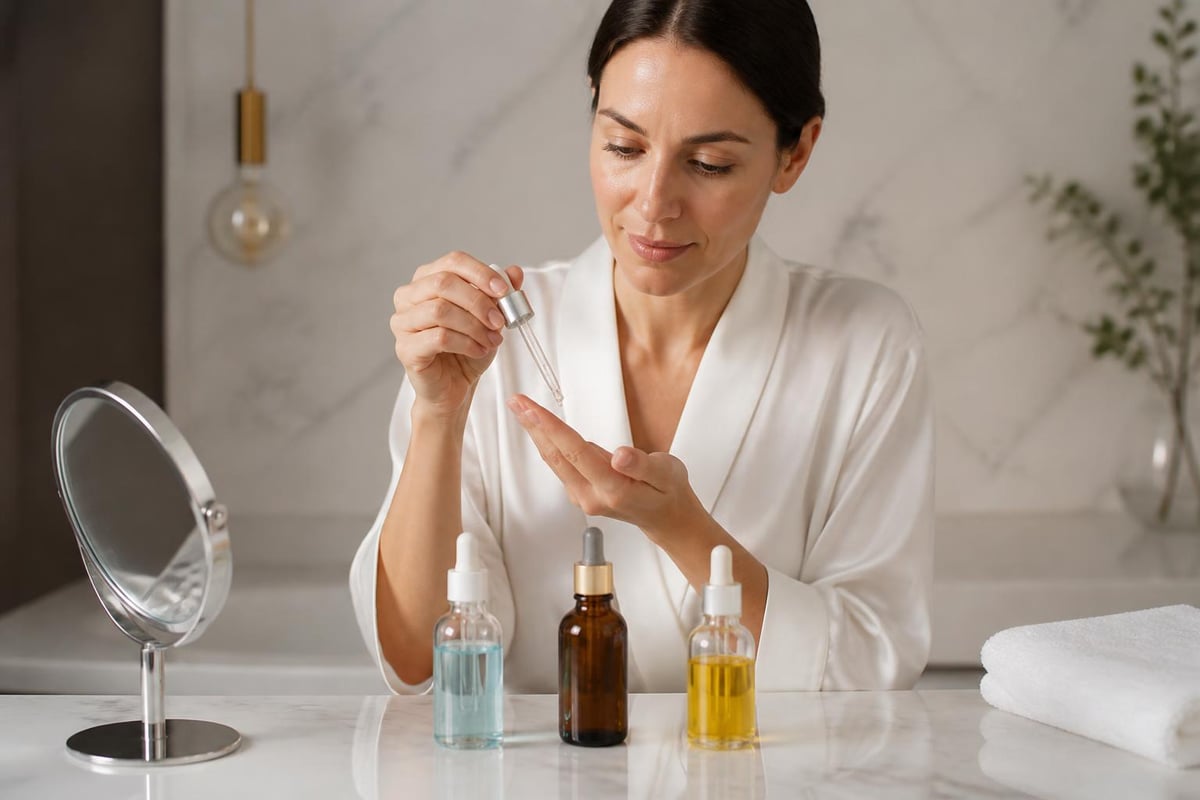
You can layer multiple serums if you have several skin concerns. Apply the thinnest consistency first, building up to thicker textures.
- Start with a hyaluronic acid serum for foundational hydration
- Follow with antioxidant serums containing vitamin C or E
- Finish with oil-based serums if you need extra nourishment
When researching all-natural skin products, you'll discover that plant-derived ingredients can be just as effective as synthetic alternatives. Natural oils like rosehip, argan, and jojoba provide excellent hydration whilst supporting your skin's health.
Moisturisers: The Foundation of Dry Skin Care
This is where the magic truly happens. Your moisturiser creates a protective seal that locks in all the hydration from your previous steps whilst providing additional nourishment.
The Cleveland Clinic's guidance on choosing moisturizers emphasizes the importance of selecting formulations appropriate for your specific level of dryness. What works for mildly dry skin won't necessarily suffice for severely dehydrated complexions.
Understanding Different Moisturiser Formulations
Lotions are the lightest option, suitable for mild dryness or summer months. They absorb quickly but may not provide enough moisture for very dry skin.
Creams offer medium-weight hydration, making them ideal for daily use. They balance effectiveness with comfort, providing substantial moisture without feeling heavy.
Balms and ointments deliver intensive hydration for severely dry skin or targeted treatment of extremely dry patches. Use these on particularly problematic areas or as overnight treatments.
When selecting from the best dry skin care products available, consider vegan moisturisers that avoid animal-derived ingredients like lanolin or beeswax whilst still delivering exceptional hydration.
Specialised Treatments for Targeted Relief
Beyond your core routine, certain treatments address specific dry skin challenges that standard products can't fully resolve.
Overnight Masks and Sleeping Packs
These intensive treatments work whilst you sleep, providing deep hydration over several hours. They typically contain higher concentrations of active ingredients and create an occlusive barrier that prevents moisture loss.
Apply them as the final step in your evening routine, allowing the formula to work its magic overnight. You'll wake with noticeably softer, more supple skin.
Facial Oils and Face Mists
| Product Type | When to Use | Primary Purpose |
|---|---|---|
| Facial Oils | After serum, before or mixed with moisturiser | Seal in moisture, provide fatty acids |
| Face Mists | Throughout the day, between skincare steps | Quick hydration boost, refresh skin |
| Hydrating Masks | 2-3 times weekly | Intensive moisture treatment |
Time magazine's comprehensive guide recommends incorporating these supplementary treatments based on your skin's changing needs throughout the year.
Ingredient Spotlights: What to Seek and What to Avoid
Not all ingredients benefit dry skin equally. Some actively worsen dryness, whilst others provide transformative results.
Ingredients to Embrace
Natural butter like shea, cocoa, and mango deliver rich emollience without synthetic additives. These plant-based alternatives work beautifully in cruelty-free formulations.
Colloidal oatmeal soothes irritation whilst providing gentle moisture. It's particularly beneficial for dry skin accompanied by sensitivity or eczema.
Peptides support your skin's natural repair processes, helping to strengthen the moisture barrier over time.
Ingredients to Avoid
- Denatured alcohol dries out skin rapidly
- Synthetic fragrances can trigger irritation and sensitivity
- Harsh exfoliants like physical scrubs damage the protective barrier
- Sulphates strip away natural oils excessively
For those interested in non-toxic skincare brands, reading ingredient lists carefully helps you avoid these problematic components whilst embracing beneficial alternatives.
Building Your Perfect Dry Skin Routine
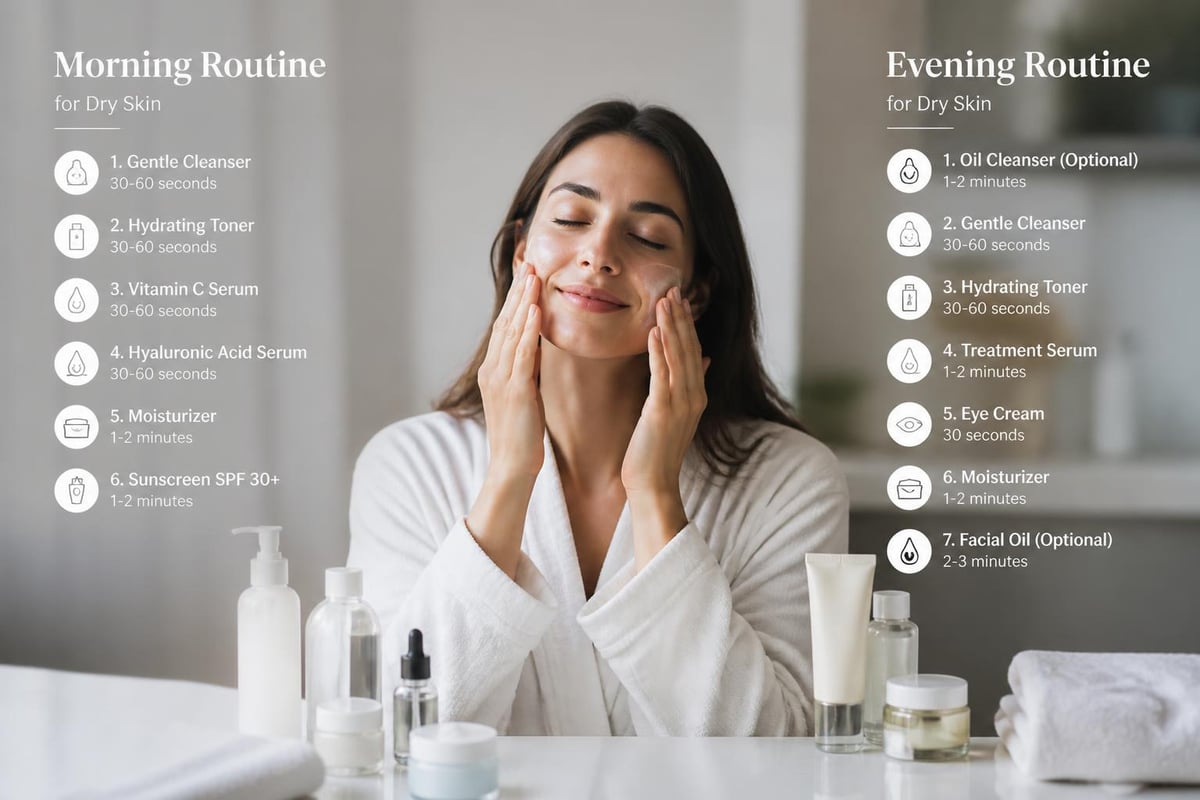
The best dry skin care products work synergistically when used in the correct order and combination. Your routine should adapt to morning and evening needs.
Morning Routine Structure
- Gentle cleanser or water rinse only
- Hydrating toner
- Vitamin C serum (optional but beneficial)
- Hyaluronic acid serum
- Moisturiser suitable for daytime use
- SPF (non-negotiable for protecting skin)
Your morning routine should focus on protection and hydration that lasts throughout the day. Choose lighter textures that work well under makeup if you wear it.
Evening Routine Structure
- Oil-based cleanser to remove makeup and SPF
- Water-based cleanser for thorough cleansing
- Hydrating toner
- Treatment serums (retinol, niacinamide, etc.)
- Facial oil
- Rich night cream or sleeping mask
Evening routines can be more intensive since you don't need to worry about products sitting under makeup. This is when you can introduce richer textures and treatment products.
Seasonal Adjustments for Optimal Hydration
Your skin's needs fluctuate with the seasons, requiring adjustments to maintain optimal hydration year-round.
During winter months, central heating and cold winds create the perfect storm for dry skin. You'll likely need richer formulations and more frequent application of the best dry skin care products in your arsenal.
Summer brings different challenges. Air conditioning indoors and sun exposure outdoors both contribute to dehydration. Switch to lighter lotions during the day, but don't skip moisturiser entirely.
Adapting Your Product Selection
| Season | Environment Factors | Product Adjustments |
|---|---|---|
| Winter | Cold air, indoor heating | Richer creams, occlusive balms at night |
| Spring | Temperature fluctuations | Medium-weight formulations |
| Summer | Heat, humidity, AC | Lighter lotions, hydrating mists |
| Autumn | Decreasing humidity | Gradually introduce richer products |
NewBeauty's expert recommendations emphasize listening to your skin's feedback and adjusting accordingly rather than sticking rigidly to the same products year-round.
Natural and Vegan Solutions for Dry Skin
The demand for ethical, sustainable skincare has led to remarkable innovations in natural and vegan formulations. These products prove that you don't need animal-derived ingredients to achieve beautifully hydrated skin.
Plant-based alternatives to traditional ingredients often provide superior benefits. Squalane derived from olives hydrates just as effectively as shark-derived versions. Shea butter offers rich emollience without beeswax.
When exploring best all-natural skin products, you'll find that natural doesn't mean less effective. Many botanical ingredients have been used for centuries precisely because they work.
Benefits of Natural Formulations
Natural ingredients tend to work harmoniously with your skin's biology rather than against it. They're less likely to cause disruption or sensitivity, making them ideal for dry skin that's often more reactive.
Collections specifically designed for dry and sensitive skin combine the best of natural ingredients with modern formulation science, creating products that deliver results whilst respecting both your skin and the environment.
Beyond Topical Products: Lifestyle Factors
The best dry skin care products work optimally when supported by healthy lifestyle habits. Your skin's hydration status reflects your overall wellness.
Hydration from Within
Drinking adequate water supports skin hydration at the cellular level. Whilst topical products work from the outside in, proper hydration works from the inside out.
Aim for at least eight glasses of water daily, increasing this during exercise or hot weather. Herbal teas and water-rich foods like cucumbers and watermelon contribute to your overall fluid intake.
Dietary Considerations
Essential fatty acids from sources like avocados, nuts, and seeds support your skin's lipid barrier. Omega-3 fatty acids particularly benefit dry skin by reducing inflammation and supporting moisture retention.
- Incorporate flaxseeds or chia seeds into your breakfast
- Snack on walnuts or almonds
- Use olive oil or avocado oil in cooking
- Eat fatty fish or consider algae-based omega-3 supplements
Environmental Factors
Running a humidifier in your bedroom adds moisture to dry indoor air, preventing overnight dehydration. This simple step can significantly improve your skin's comfort level.
Avoid excessively hot showers, which strip away your skin's natural oils. Keep water temperature lukewarm and limit shower time to ten minutes or less.
Common Mistakes to Avoid
Even with the best dry skin care products, certain habits can undermine your efforts and perpetuate dryness.
Over-exfoliating is perhaps the most common mistake. Whilst gentle exfoliation removes dead skin cells, excessive scrubbing damages your moisture barrier. Limit exfoliation to once or twice weekly with gentle chemical exfoliants rather than harsh physical scrubs.
Skipping SPF allows UV damage to compromise your skin barrier, worsening dryness. Choose a moisturizing sunscreen that provides protection without further dehydration.
Using too many actives simultaneously can overwhelm and irritate dry skin. Introduce new products gradually, allowing your skin to adjust before adding another.
Inconsistent routines prevent you from seeing real results. Your skin needs consistent care to improve and maintain hydration levels.
Understanding face products for sensitive skin helps you avoid ingredients that might trigger reactions whilst choosing formulations that genuinely support your skin's health.
Professional Treatments Worth Considering
Whilst home care forms the foundation of managing dry skin, certain professional treatments can provide additional benefits when incorporated periodically.
Hydrating facials deliver intensive moisture through professional-grade products and techniques. Aestheticians can customise treatments to address your specific concerns.
LED light therapy stimulates cellular activity and collagen production, supporting your skin's natural moisture retention capabilities.
When to Seek Professional Help
If your dry skin doesn't improve with consistent use of the best dry skin care products, consult a dermatologist. Persistent dryness might indicate underlying conditions like eczema or psoriasis requiring medical treatment.
Professional guidance helps you identify whether your concerns stem from product selection, application techniques, or deeper issues requiring specialized intervention.
Finding the right combination of products transforms dry skin from a daily frustration into a manageable concern. By understanding your skin's needs, selecting appropriate ingredients, and maintaining consistency, you can achieve the healthy, comfortable complexion you deserve. White Rabbit Skin Care offers thoughtfully formulated vegan skincare solutions designed specifically for dry and sensitive skin types, combining natural ingredients with proven effectiveness. Explore their range of cleansers, toners, and moisturisers to discover your perfect skincare match today.